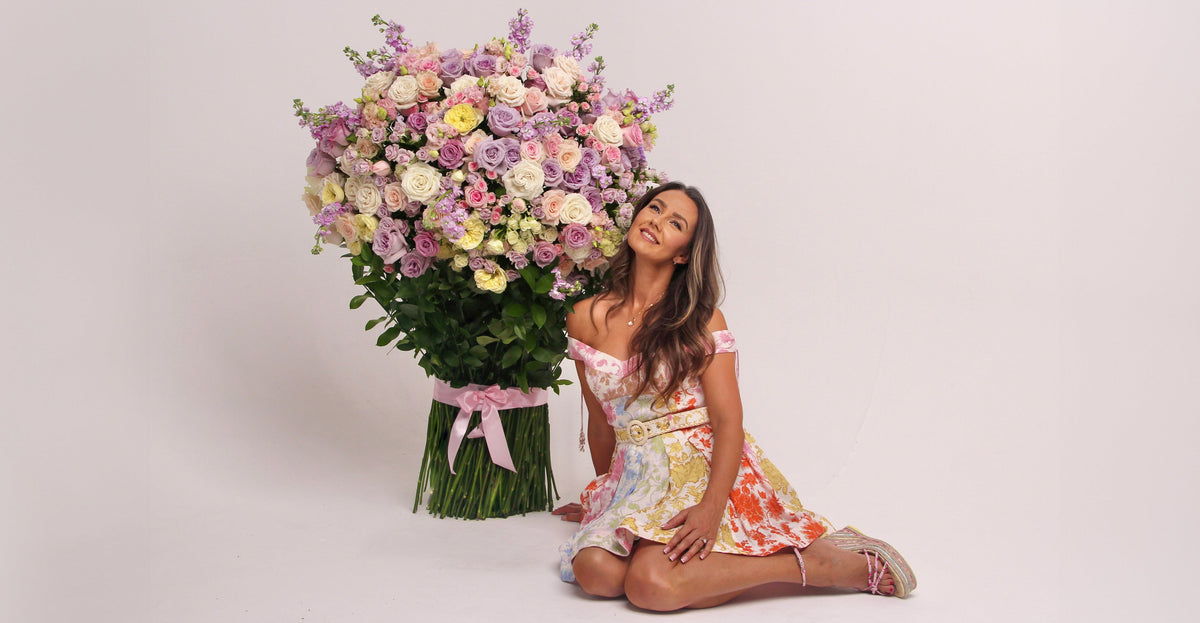
What "Luxury" Actually Means in Flowers — and What It Doesn't
Every florist in London calls itself luxury. Here is what the word physically means when it is true — in the stem, the conditioning, the hands and the delivery — and the things it is used to disguise.
Search for a florist in London and almost every result describes itself as luxury. The word has been used so freely that it has stopped meaning anything — which is convenient for anyone selling a £40 bouquet with a ribbon on it, and unhelpful for anyone trying to buy the real thing.
So here is what the word means when it is true. Not as a mood, but as a set of physical differences you can see, hold and, in most cases, count.
It starts with the stem
Flowers are sold at auction and at market in grades, and the grade is mostly about length. A rose sold at 40 centimetres and a rose sold at 70 centimetres are not the same flower with a longer stalk. The longer stem comes from a stronger plant, carries a larger head, opens more slowly, and lasts noticeably longer in the vase. It also costs several times as much.
Most flowers sold in Britain are the shorter grades, because that is what a £40 price point can afford. A luxury florist buys the longest, then cuts them down to the height the arrangement needs. You are paying for the flower that was thrown away, and it is the reason the ones that remain look the way they do.
Then the variety
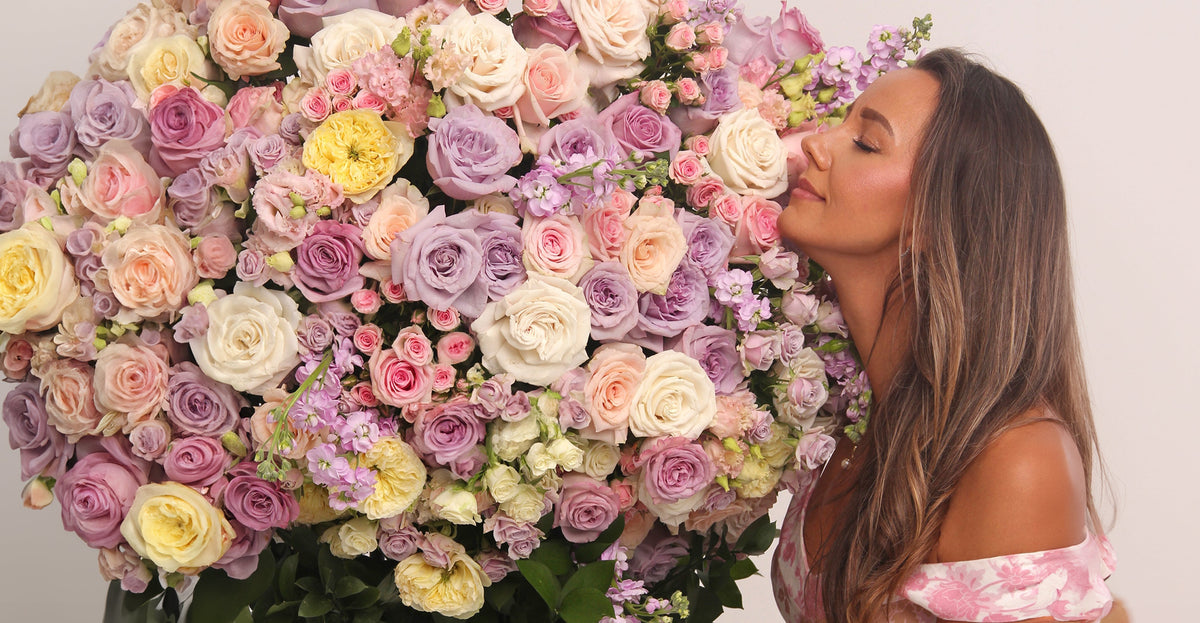
Within any flower there is a hierarchy of varieties. A standard rose and a garden rose share a name and very little else — the garden rose has three times the petals, a scent, and a bloom that opens over days rather than staying closed until it drops. It is also grown in far smaller quantities, which is why it is expensive and why most florists do not stock it.
The same is true of peonies, ranunculus, anemones, tulips. In every case there are the varieties grown for volume and the varieties grown for people who will notice. A luxury florist buys the second kind, or does not buy that flower at all that week.
Then the conditioning
This is the part nobody sees, and it is where most of the difference in how long flowers last is decided.
When stems arrive from market they have been out of water, in the cold, for hours. Before anything is arranged they need to be recut at an angle, stripped of leaves below the waterline, and left to drink — usually overnight, in clean water, at the right temperature. Some flowers want their stems seared, some want deep water, some want very little. Every variety is different, and getting it wrong is invisible on delivery day and obvious three days later.
A florist working at volume has no time for this. A luxury florist has no choice about it — because the arrangement is expected to look the same on day five as it did on day one, and it is the conditioning, not the flower, that makes that possible.
Then the hands
An arrangement built quickly and an arrangement built properly can look similar in a photograph. They do not look similar in a room, and they do not last the same length of time.
Building properly means every stem is placed rather than pushed in; the mechanics that hold it are hidden and secure; the water is reachable by every stem; the piece has a front, a shape and a scale that suits the vessel. It takes an hour for something modest and most of a day for something large. That time is in the price, and it is the reason the price cannot be made lower without the arrangement becoming something else.
Then the vessel
The thing the flowers arrive in is the part of the gift that stays. A velvet box, a hand-thrown ceramic, a heavy glass vase — these are real objects with real costs, and they are chosen because they will sit in the house long after the flowers have gone, quietly reminding someone who sent them.
Cellophane, a plastic sleeve, a cardboard box with a logo on it — these are packaging. They are not the same thing, and a luxury florist does not use them.
Then the delivery
How flowers travel the last mile is the difference most often hidden. Many well-known flower brands do not deliver anything themselves: the order is passed to a local shop or a courier, the flowers spend hours in a van with parcels, and they arrive tired, warm, and occasionally upside down.
A luxury florist delivers its own work, by hand, in its own vehicle, with someone who knows what is in the box and how it should be carried. In London that means the flowers left the studio an hour or two ago, not the night before.
What luxury is not
It is worth being clear about this, because the word is used to sell all of the following.
Size. A large bouquet of short-grade stems is a large bouquet of short-grade stems. Volume is the cheapest thing to add to an arrangement.
Decoration. Glitter, gold leaf, dyed blooms, plastic butterflies, ribbon curled with scissors. Anything added because the flowers were not enough on their own.
The word itself. A florist who has to tell you the flowers are luxury, repeatedly, is telling you something.
Out-of-season flowers as a boast. A peony in December has been flown from the other side of the world and will last two days. That is not luxury; it is expense. The luxury version is the best of what is genuinely at its peak this week.
How to tell, in ten seconds
Look at three things. The stems, if you can see them — long, thick, clean. The heads — large, unblemished, opening rather than blown. And the ratio of flowers to everything else. If half of what you are looking at is foliage, filler and wrapping, the flowers were not the point.
Then look at the price. If it is under a certain level, the arithmetic above is impossible, however good the photograph. Long-grade stems, rare varieties, a day of conditioning, hours of building, a real vessel and a hand delivery cannot be done for £45. Nobody is cheating you at £45 — they are simply selling a different product.
What we do
Everything above is how La Grande Beauté works, and it is why our arrangements begin at £90 and rise to £3,000. The flowers are bought at market at the top grades, conditioned overnight in the studio, built by hand, presented in vessels that stay, and delivered across London by our own team.
Three arrangements built this way
 Venus
From £150
Shop now
Venus
From £150
Shop now
 Lilac Morning
From £480
Shop now
Lilac Morning
From £480
Shop now
 À la rose
From £1,000
Shop now
À la rose
From £1,000
Shop now
If you would like to see the difference rather than read about it, the Luxury Collection is where to start. Every arrangement in it is available for next-day delivery across London when ordered by 10pm.
La Grande Beauté is a London floristry studio. Arrangements are made by hand and delivered by our own team across prime London.
Get in touchAll journal entries